


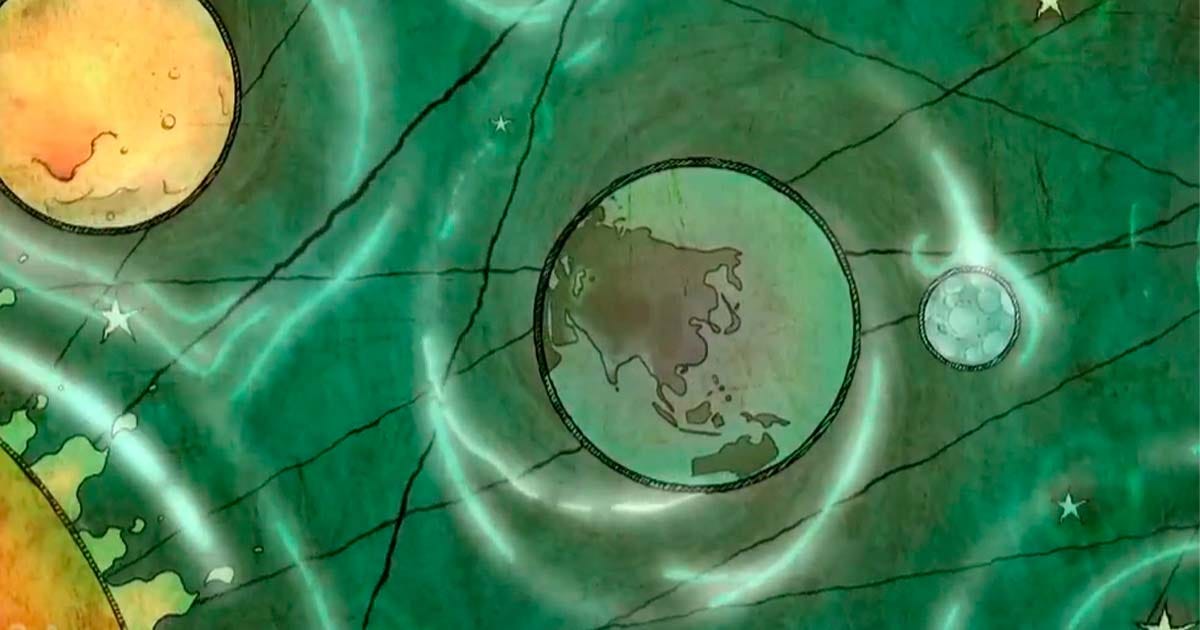
What is “aether”? Well, that is simple: aether (also spelled as ether, aither, or æther) is the “material that fills the region of the universe of the terrestrial sphere” or at least it was according to ancient science.
Aether was also known as “The Fifth Element” or quintessence, and the concept of aether was used in multiple theories scientists postulated to explain natural phenomena such as gravity and light. The origins of aether can be traced back to ancient Greece.
According to Greek Mythology, aether was thought to be the “pure essence” that the gods breathed, which filled the space in the heavens where they lived. It was a heavenly form of air that was only created in the heavens, mortals breathe oxygen, and gods breathe aether.
The mythological personification of Aether is the son of Erebus, the personification of darkness, and Nyx, the personification of night.
The 5th Element
Plato described aether as being “the most translucent kind [of air] which is called by the name of aether” in his work Timaeus. While Plato does refer to the concept of aether when describing air, he was a firm believer in the classical system of four elements.
The classical system of four elements is something everyone is familiar with; it is the belief that the four elements that everything is composed of are Earth, Fire, Air, and Water. This would seemingly leave no space for aether, but this is only the beginning of the complications.
The next philosopher who wrote about aether, or the fifth element, was Aristotle, a student of Plato’s. In Aristotle’s book On the Heavens, he explains how the four classical elements were known to change.
Aether, or as Aristotle called it, the first element was found in the heavens and celestial realm, was unlike the four elements. Aether was not dry or wet, and it was not hot or cold. Aether was unable to have “motion of quality or motion of quantity,” but it was able to move in a circular pattern.
