


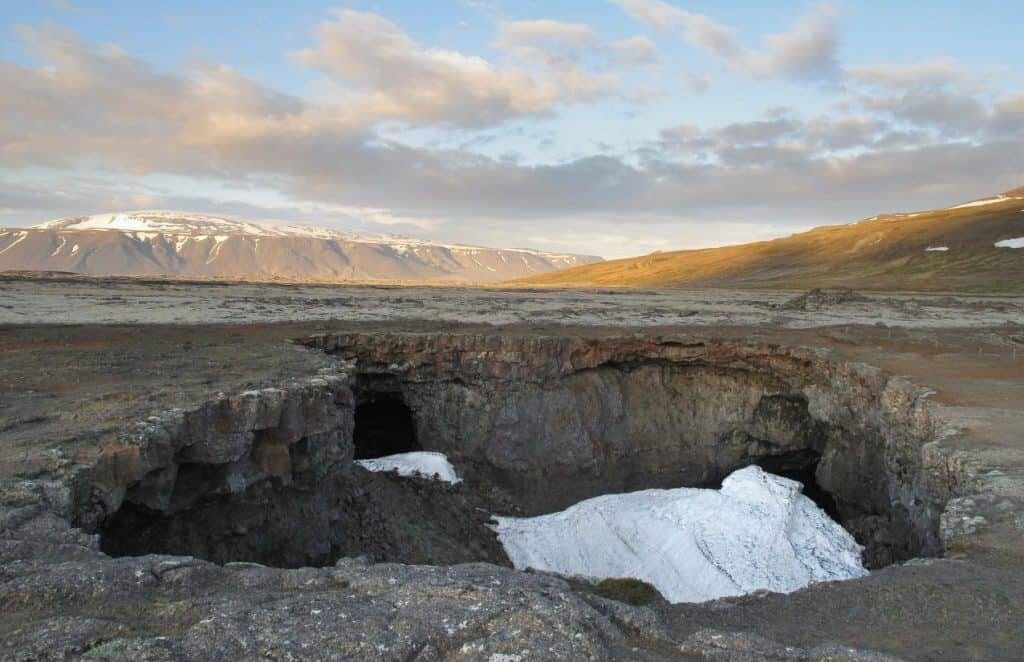
Beneath the basalt skin of a 10th-century lava flow lies Surtshellir, a black tube named for the fire-giant Surtr where Vikings seem to have bargained with gods, laws, and enemies in the dark. Here they raised Iceland’s largest known Viking Age stonework, shaped a boat-like hall, feasted to the last marrow-scraped splinter, struck sparks from colored jasper but shunned the nearby black, and left beads and a cross-marked weight as if paying dues to powers seen and unseen. Sagas tell of outlaw bands and a chieftain’s brutal mutilation; a poet is said to have come to recite to the giant himself. Fortress, hideout, or shrine? In Surt’s Cave, archaeology and legend converge - and every stone suggests a different answer.
