


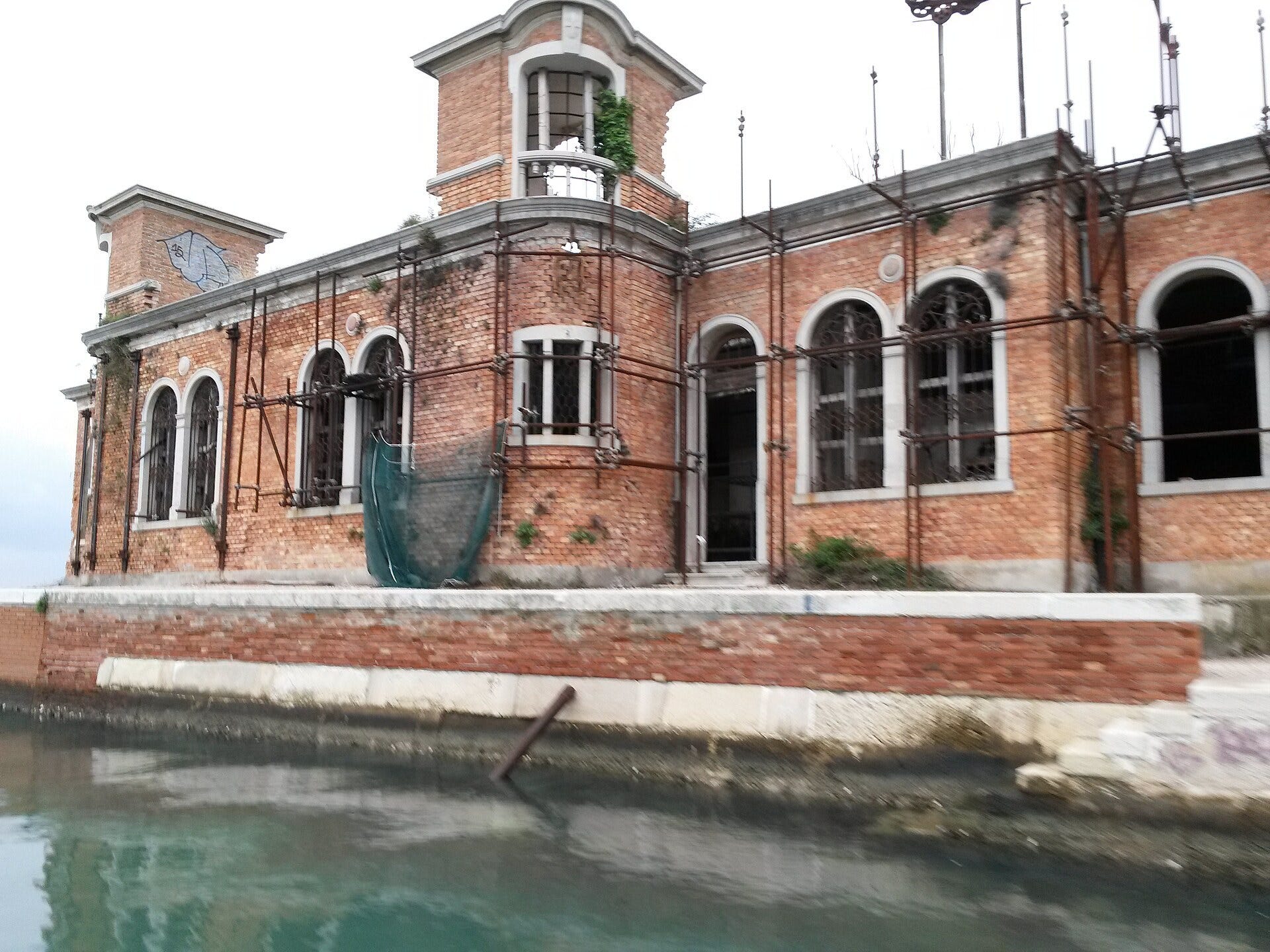
Ask the internet about Poveglia and you will get the same story almost word for word. A tiny island in the Venetian Lagoon, so soaked in death that half its soil is human ash. Plague victims, living and dead, dumped into pits and burned by the tens of thousands. A twentieth-century asylum where a sadistic doctor experimented on patients until the ghosts drove him mad and he threw himself from the bell tower. Fishermen who refuse to go near it. A government that cannot give it away.
It is one of the most shared ghost stories in the world. And when you go looking for the documents behind it, most of it simply disappears.
What is left is a real island with a real, and genuinely somber, history. And in the last two years something has happened on Poveglia that no ghost story predicted.
A real island with a long past
Poveglia sits in the southern lagoon between Venice and the Lido, a cluster of about 7 hectares divided by small canals into three parts. One of them holds an octagonal fort. Venetian tradition places refugees from the mainland there as early as 421, and by the ninth century it was a thriving community of fishermen and salt makers. In 864, according to the chronicles, some 200 servants and followers of the murdered doge Pietro Tradonico were settled there.
The island’s ordinary life ended in war. During the War of Chioggia between Venice and Genoa, from 1378 to 1381, the population fled and never really came back. Over the following centuries the Venetian state offered the island to new occupants more than once, including to Camaldolese monks in 1527 and to descendants of the old islanders in 1661. Both turned it down.
The quarantine years
Here is where the real dark chapter begins, and it is very different from the legend.
In the late 1700s, Poveglia came under the control of Venice’s health magistrate and became part of the city’s system for isolating ships, crews and cargo suspected of carrying disease. Venice had pioneered this system centuries earlier with its lazzaretti, the quarantine islands of the lagoon. When ships arrived carrying plague in 1793, their sick crews were isolated on Poveglia.
There is a moving piece of physical evidence for that episode. On the island, among the undergrowth, stands a small marble marker with a Latin inscription: ne fodias vita functi contagio requiescunt MDCCXCIII, roughly “Do not dig. Here rest those who died of the contagion. 1793.” It is a real grave marker for real people, and it deserves respect.
But it is also a long way from the internet’s numbers. Online you will read that 100,000 or more plague victims lie under Poveglia. The Venetian writer and historian Alberto Toso Fei told The New York Times in 2025 that Poveglia was only one of several lagoon islands used to isolate the sick over the centuries, and that the number who died of plague on the island itself was likely closer to about 20.
The great plague burials of Venetian history were real, but they belonged mainly to the city’s main quarantine islands, the Lazzaretto Vecchio and the Lazzaretto Nuovo, not to Poveglia. If you want to understand the eerie figure who walks through so many of these stories, our piece on the plague doctor and the origin of the Venice Carnival mask tells that history.
The “asylum” that was a home
The second pillar of the legend is the hospital. The island’s surviving buildings, the ones in the photograph above, date from its later life as a health facility. Poveglia continued as a maritime health station into the twentieth century, and in 1922 its buildings were converted into a care home and long-stay facility, which operated until 1968, when the island passed to the Italian state.
It is often called an asylum, and some sources describe it as a psychiatric hospital. But the one detailed eyewitness account we have paints a gentler picture. The British writer Sylvia Sprigge, in her 1961 book The Lagoon of Venice, described the island as a home for poor elderly people. She delivered a letter to the doctor there and described able-bodied residents tending vegetable plots and making wine by treading grapes in the traditional way.
What about the mad doctor who tortured patients and leapt from the bell tower? He has no name, no date and no paper trail in any account we could find. The tower itself is real, and far older than the hospital. It is a twelfth-century bell tower that once belonged to the church of San Vitale. The church was demolished in 1806 under Napoleonic rule, and the tower survived because it was useful as a lighthouse.
So where did the ghosts come from?
The answer is surprisingly recent. Researchers writing in Shima, an academic journal of island studies, in 2020 traced ghost stories about Poveglia on English-language blogs to around 2005. The legend then exploded after an American paranormal TV show, Ghost Adventures, filmed an episode there that was broadcast in November 2009.
The Italian skeptics’ organization CICAP has argued that the island’s haunted reputation and the huge plague death toll were essentially created and spread by that program. After the broadcast, Poveglia began appearing on “most haunted places on Earth” lists alongside places like Russia’s Hovrinskaya Hospital and India’s abandoned village of Kuldhara. The lists repeated each other, the numbers grew, and an island most Venetians knew as an abandoned old people’s home became a horror icon.
It is a familiar pattern. Like the legend of Maryland’s “Hell House”, a real but neglected building attracts stories, and the stories quickly become more famous than the history.
The island nobody would buy
The legend has one more chapter: the auction. In 2014 the Italian state put Poveglia up for a 99-year lease to raise money and find someone to restore it. The headlines wrote themselves. “Haunted island for sale.”
The highest bid, €513,000, came on 13 May 2014 from the businessman Luigi Brugnaro, who proposed a large restoration plan. The deal never went through. The state judged that the bid did not meet the conditions, and some reports said it was simply too low. Brugnaro later became mayor of Venice and dropped his interest in the island.
Ghost sites love to say the sale failed because of the curse. The truth is that ordinary Venetians stopped it.
Poveglia for everyone
In April 2014, as the auction approached, a group of local residents founded an association called Poveglia per tutti, “Poveglia for everyone.” Their idea was simple: the island should not become a private luxury hotel but stay open to the people of the lagoon. They raised €460,000 from more than 4,500 contributors to take part in the bidding.
They lost the auction. Then they kept going for a decade. After years of rejected applications, the regional administrative court of the Veneto ruled in the association’s favor twice, the second time in November 2024, finding that the state property agency had not properly justified refusing them.
On 1 August 2025, Poveglia per tutti was granted a six-year concession over the northern part of the island to create a public park in the lagoon. Volunteers have since been clearing overgrowth, and in December 2025 they planted 30 trees that had been used in the Venice Architecture Biennale. In July 2026, NPR reported on volunteers working to bring the island back to life.
The story told by the internet was of a cursed island no one dared touch. The real story is of a community that refused to let a piece of its history be sold off, and that is now planting trees on it.
What Poveglia really is
So, is Poveglia haunted? That is a question of faith and taste, and we will leave it to you. What we can say is what the records show. Poveglia was a farming and fishing island emptied by war, a quarantine station where a number of sailors died in the plague of 1793 and lie under a stone that asks us not to disturb them, a care home for the elderly poor, and an abandoned ruin that television turned into a horror set.
The dead of 1793 were real people. They deserve to be remembered for who they were rather than turned into a special effect.
Sources
Poveglia per tutti, “Our story” and FAQ: povegliapertutti.org/our-story
Agenzia del Demanio (Italian State Property Agency), announcement of the Poveglia concession, July 2025: agenziademanio.it
Elisabetta Povoledo, “For Some Venetians, This Overgrown Island Is Paradise,” The New York Times, 15 August 2025
NPR, “In a hard-won battle, Venice gets a rare piece of green space for the public,” 19 July 2026: npr.org
CICAP, on the origins of the Poveglia haunting legend (Italian): cicap.org
Cavallo and Visentin, Shima journal (2020), on Poveglia and its “dark” reputation: shimajournal.org
Sylvia Sprigge, The Lagoon of Venice: Its Islands, Life and Communications (1961)
“Poveglia,” Wikipedia (English and Italian): en.wikipedia.org/wiki/Poveglia
Original Historic Mysteries article: Poveglia Island and Its Haunting History
---
Enjoyed this? There is a lot more behind the paywall.
Every week, paid subscribers get our deepest investigations: legends traced back to their very first source, codes that have beaten experts for centuries, and disappearances nobody has explained. This week, paid members get the full story of how a famous Soviet “alien diver” story fell apart under one simple question, the truth behind a whole village that supposedly vanished in the Canadian Arctic, and the 140-year-old riddle of the Beale treasure ciphers.
Become a paid subscriber to Historic Mysteries and get every story, plus the full archive.