


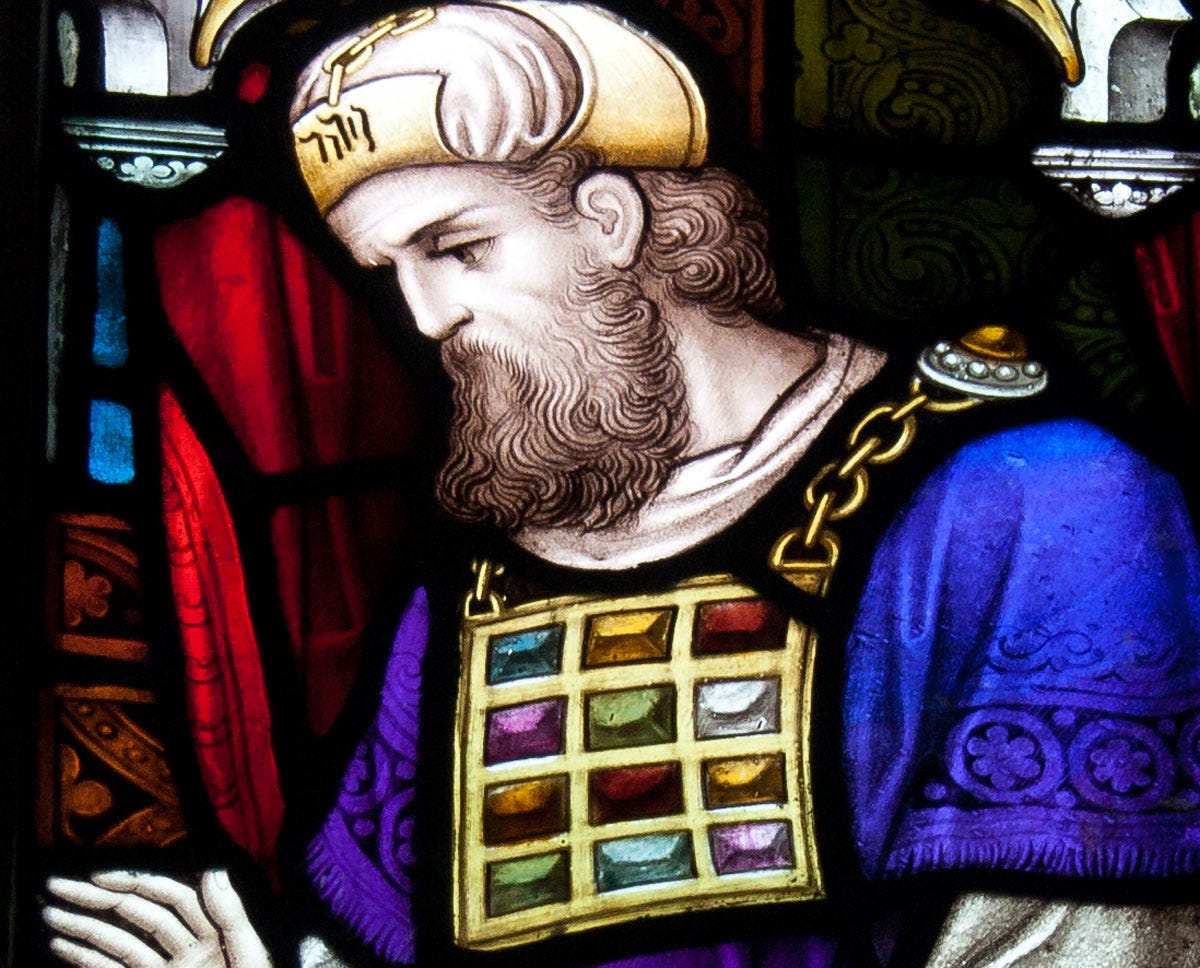
Much of the history of Judaism revolves around protocol and divine laws, provided by the Hebrew god for his chosen people. The Bible contains entire books which revolve around appropriate behaviors and manners in which to worship God, centered for much of the text around the great Temple in Jerusalem.
However, the passage of time has made much of what was then well-known obscure to the modern reader. While many of the ascribed behaviors are still clear, aspects at the ceremonial heart of Judaism are often unclear, and this is never more so than with the treasures of the “House of God”.
One of the most interesting of these mysterious items is what is known as the “Urim and Thummim” which has been tentatively translated to mean the “lights” and “perfections”. These two words refer to something at the heart of Hebrew ritual, something which apparently allowed for communication with God himself.
What, therefore, was the Urim and Thummim?
What Do We Know?
We can be certain that the Urim and Thummim were tangible objects. They were associated with the “hoshen”, the traditional vestment worn by the high priest of the Temple of Jerusalem, and here we are on firmer ground.
We have a detailed description of the hoshen, a breastplate consisting of precious gems in a grid which the priest wore on ceremonial occasions. It seems that the Urim and Thummim, whatever they were, were used to ask questions of God through interacting with this breastplate.
Most historic scripts and scholars suspect that the phrase refers to a set of two objects that are used by the high priest, who would place them into a pouch within the hoshen. Once placed within the pouch they would either answer a question set by the priest, or more obscurely reveal the will of God.
